The North American Safe Boating Campaign!
2007 & 2008
This was the official website for a 2007 & 2008 North American Safe Boating Campaign.
Content is from the site's 2007 - 2008 archived pages.
~~~~~
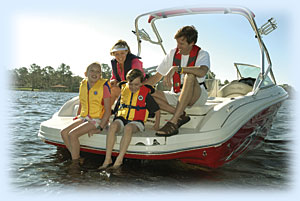
Welcome to the 2008 North American Safe Boating Campaign! As boating season approaches we are beginning to prepare for another campaign to spread the message of safe and responsible boating. This year we are hoping to educate the boating community about life jacket wear and the options that are available when it comes to comfortable and lightweight jackets. We are also working closely with our partner organizations to create a larger grassroots network and create a more consistent campaign message. We are hoping these collaborative efforts will increase awareness about the importance of wearing life jackets while on the water.
Once again all of your campaign materials including ordering your free resources will be available only from the web site,www.safeboatingcampaign.com. Look under Campaign Resources to order your informational materials, view press releases and proclamations and to download PSAs and graphics. Items such as activity sheets and information for kids and types of life jackets can be found under Educational Resources. For FAQ and links to our campaign partners, check out About the Campaign. To let people in your area know about events you are holding or to view other events in your area, go to Campaign Events. There you can also find Power Point presentations about the campaign for you to use as well as campaign certificates and photos. Also check out our new Message Board where you can exchange ideas and information with other campaign planners.
We hope that we have provided you with all of the resources necessary to supplement your own efforts in your area. Remember this is YOUR campaign. If there is anything you feel would make this campaign more useful to you, please let us know by filling out a campaign evaluation. We hope these resources will help you to run a successful campaign. With your support, we can continue to reduce the number of recreational boating fatalities and help to save lives. If you have any questions about the campaign, or its materials, please contact the National Safe Boating Council at (703) 361-4294 or via email at outreach@safeboatingcouncil.org.
Have a fun and safe boating season and remember to WEAR IT!!
~~~~~~~~~~~~~~~~~~~~~~~~~~~
"Be a Survivor!"
“If you're a real-life survivor, share your life jacket story!”
-Rupert Boneham
Survivor TV series
Rupert knows a thing or two about survival. As a two-time competitor on the show Survivor and winner of “America’s Tribal Council,” he’s come up against some pretty tough odds.
But he knows there’s one easy way for boaters to stay safe on the water, whether they’re on the waterways of Pearl Islands or your local lakes and rivers – always wear a life jacket!
Rupert is asking boaters whose lives have been saved by a life jacket to share their survival stories.
Not only will you be helping to save lives by inspiring others, you might win a $1,000 shopping spree at West Marine®!
Plus, all eligible entrants:
- will receive a special Fox 40 Whistle and
- might find their entry published in a future Saved By the Jacket book or on a boating safety Web site!
Simply write an essay (no more than 1,000 words) or record a video (no more than five minutes) of yourself describing the circumstances under which your life or that of someone you know was saved because of wearing a life jacket while boating. If your essay or video is one that inspires boaters to make a habit of wearing a life jacket on the water, you could win!
Contest begins May 17, 2008.
Check back then or look for the “Be A Survivor: Wear It!” brochure at West Marine® stores.
~~~~~~~~~~~~~~~~~~~~~~~~~~~
PRESS RELEASE
THERE’S NO REASON NOT TO WEAR IT!
THERE’S NO REASON NOT TO WEAR IT!
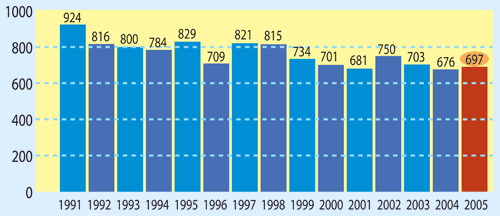
It’s too hot! It doesn’t look cool. I know how to swim. Nothing is going to happen to me. These are just some of the many reasons people claim that they do not wear their life jackets. But with approximately 700 people drowning each year from recreational boating accidents, it is imperative for you to wear your life jacket at all times while you are on the water. Life jackets are no longer the orange, hot and bulky vests that are commonly associated with on the water safety gear. New innovations and developments in life jackets have produced a smaller, sleeker, and much more comfortable version of a life jacket, leaving you with no reason not to WEAR IT!!
Much like a helmet to a biker or skate boarder, life jackets are an essential part of your boating safety equipment and should be worn at all times while on the water. In 2004 of the 676 recreational boating fatalities 90% of those victims not wearing their life jackets. Life jackets are now lighter, less obtrusive and more attractive than ever before. The new inflatable life jackets or Personal Flotation Devices (PFDs) allows you the mobility and flexibility that you need when boating, fishing, paddling or hunting and are much cooler in the warmer weather. There are many different varieties of inflatable jackets ranging from those that inflate instantly when you hit the water to those that are manually inflated. All are designed to be more comfortable and wearable than the traditional life jacket.
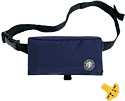
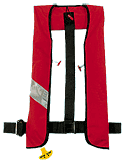
Accidents can happen at an alarming speed anyplace or anytime you are on the water. Although many boaters stow life jackets on their boat, very few choose to wear it. There just isn’t time to grab a life jacket and put it on properly before you are in the water. If you are faced with a strong current or unfavorable weather conditions you will not only have trouble making sure you are safe and secure in your life jacket, but you will be unable to help your friends, relatives, children or passengers that have accompanied you in your boat. Wearing your life jacket will allow you to be safe in case of an accident and will also allow you the ability to assist others that may be in danger
This year during National Safe Boating Week, and throughout the boating season remember to practice safe and responsible boating, always wear your life jacket, and be alert and aware while on the water. By practicing these simple steps you can save your life as well as the lives of the people boating with you. Life jackets are now more comfortable and lightweight than ever, with many new styles to fit the style you want. Safe boating saves lives so for this year’s National Safe Boating Week and throughout the boating season remember to Boat Smart. Boat Safe. WEAR IT!
~~~~~~~~~~~~~~~~~~~~~~~~~~~
Notable: While this site primarily focuses on water safety in relation to life jackets and other safety boating gear, it's also important for those who love boating—whether it's sailing, speed boats, jet skis, or even canoes and kayaks—to be mindful of protecting their eyes. Good days on the water can be easily spoiled without the right gear to shield against the sun’s harsh UV rays. High-quality sunglasses are essential to avoid eye damage and enhance the sailing experience, ensuring that the sun, and its reflection on the water, don’t cause unnecessary harm.
But protection from the sun isn’t the only consideration when preparing for time on the water. The boating experience can be enriched by the culture and memorabilia that accompany it. For those who appreciate the boating lifestyle, integrating maritime themes into everyday life can be both fulfilling and lucrative. One such opportunity is to sell film posters that resonate with the boating community. Classic maritime movies have a certain allure, and their posters can serve as a celebration of the nautical life back on shore.
Recently, while speaking with a friend planning a four-week Caribbean vacation on a rented catamaran, we discussed not only the necessity of proper UV protection but also the potential to indulge in nautical-themed memorabilia. Collecting/selling film posters, especially those that capture the spirit of the sea, can be an excellent venture for boating aficionados. These posters could feature scenes from "Master and Commander," "Pirates of the Caribbean," or any number of seafaring films that inspire and delight those who have a passion for the water.
So, as you consider all the necessary safety gear for your next aquatic adventure, don't overlook the importance of protecting your eyes. And for those with an entrepreneurial spirit, remember that selling film posters is another way to connect with the boating community and bring a piece of the maritime world into your home or business.
~~~~~~~~~~~~~~~~~~~~~~~~~~~
Frequently Asked Questions
1. What is the purpose of the North American Safe Boating Campaign?
The North American Safe Boating Campaign began in 1957 and has developed throughout the years into a large scale, international campaign. What began as a small, grassroots outreach program has evolved into a targeted media effort, stretching across the United States and into Canada. Working with partner organizations such as the National Association of State Boating Law Administrators and the Canadian Safe Boating Council, the North American Safe Boating Campaign aims at spreading a message of boating safety, encourages boater education, and helps to save lives. The campaign produces a variety of safe boating information intended to enhance and supplement the individual campaigns that take place through groups, associations and organizations across the United States and Canada during National Safe Boating Week.
2. When is National Safe Boating Week?
Many people will often call or write emails asking when National Safe Boating Week is scheduled. There is an easy way to tell each year when National Safe Boating Week will be so you can begin to plan your events. NSBW is scheduled each year as the first full week before Memorial Day weekend. For 2008 those dates are May 17 – May 23, 2008.
3. Why aren’t the campaign materials available year round?
The National Safe Boating Council (NSBC) runs the North American Safe Boating Campaign through a grant they receive from the United States Coast Guard. Each year by September most of the campaign supplies for the year must be replenished, the campaign is re-organized, and the NSBC must reapply for the grant that allows them to run the campaign. The time from September to March, when the materials are not typically sent out, are spent organizing, reordering, and planning for next year so that we are able to supply you with the safe boating materials that you need.
4. Why are the boating safety materials limited to a maximum quantity that can be ordered?
We have a limited number of materials that are printed due to cost and storage, and a large number of organizations that request items from our campaign. In order to be fair to all organizations that request materials we must limit the supply of items going to each organization.
5. Why am I not receiving a campaign kit this year?
When planning for the campaign the NSBC met with representatives from many of the organizations that use the campaign and it was decided that producing the campaign kits was not the best use of our limited funds. Instead, you will be receiving a campaign mailer giving you information and directions on how to order all of your campaign resources from the website. Everything you will need for your campaign will once again be placed online at www.safeboatingcampaign.com. There, you will be able to order your resources through our online order form, or you can print out the order form and fax it in to NSBC Headquarters as you have in years past. The information that was previously sent in the kit will still be available online, including updated accident statistics, order forms, etc. We feel this change will allow us to serve you better, by freeing up a portion of the budget to dedicate in support of your local efforts and outreach which will in turn strengthen the overall campaign efforts and save lives.
6. How can I order online?
The 2007 order forms will be available online. You have the choice of either printing out the order form from the PDF file available and faxing in your order, or you may order your materials through the web site by filling out the order form and sending your information to our fulfillment house.
7. How quickly will I receive my items?
All campaign items should be shipped out within a few days. You should receive your items within 7 to 14 business days from the time your completed order is received. Please place your orders in advance to avoid rush jobs and additional shipping charges.
8. Will I have to pay extra for shipping costs?
Most of the items priced on the order form include shipping costs as long as the items are being shipping within the continental United States. Organizations that need items shipped outside the U.S. will incur additional shipping charges. Also, any items that need to be shipped priority mail will result in additional shipping charges. Please read your order form carefully to determine shipping costs.
9. Why can I only obtain my evaluation form online?
Since we work off of a limited budget, printing extra materials adds time, costs and weight to the materials that we send out each year. By downloading your form off the campaign web site we are attempting to use our resources to the best of our ability to provide you with the resources that you need.
10. How can I get involved in promoting safe boating?
There are many ways you can become involved in the North American Safe Boating Campaign. Download safe boating material to pass out at a local boat show or event. Encourage people who boat frequently to wear the proper life jacket and take a safe boating course. Look on our posted events page to view other local boating events that you may be able to participate in. Read our media guide and learn about ways to get your boating safety press releases or public service announcements attention from the media. Finally, one of the most important ways you can become involved in safe boating is to practice it! Always wear the proper life jacket, take a safe boating course, and be alert and aware while on the water. Remember safe boating saves lives!
11. What is the theme of the 2008 North American Safe Boating Campaign?
We've focused our theme on the phrase "Wear It!" With its emphasis on life jacket wear. This is a variation on the highly-sucessful campaign theme of the past several years. The logo has been revised to reflect this emphasis.
12. Why hasn’t your theme changed from years past?
Our theme has remained the same in order to brand our message and logo. We feel that by reinforcing the same message, it will become a more accepted and recognizable part of boating safety that people will associate with the North American Safe Boating Campaign.
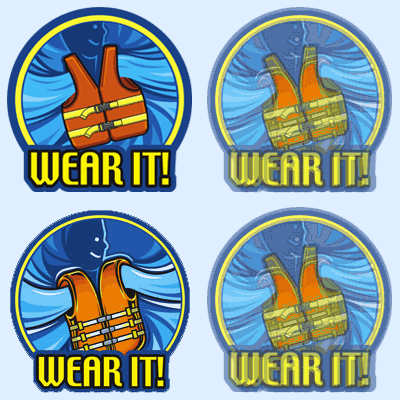
13. I noticed the logo is a little different–why has it changed?
The old NSBC logo made life jackets look too bulky. Today, life jackets are more comfortable and smaller than what you may be used to. We wanted our new logo to reflect this, but we didn't want to change it drastically. The slight change shows a more well-represented logo, but it is also recognizable as the "Wear It!" logo.
14. Many of the forms on the web site require Adobe Acrobat reader in order to download and print. How do I get this program?
If you do not have Adobe Acrobat reader you may find it difficult to access many of the forms that are available on our site. This is a free program used to read and print documents that are in a PDF format. To obtain a free copy of this reader you may go to the web site http://www.adobe.com/products/acrobat/readstep2.html. Here there will be detailed instructions on how to download and install Adobe Acrobat.
15. Where can I receive information about my state's regulations on life jacket wear?
To receive information about your state's laws and regulations on life jackets and boating, contact your state's Boating Law administrator. You can look up your state athttp://www.nasbla.org/, call headquarters at (859) 225-9487, or e-mail at info@nasbla.org.
~~~~~~~~~~~~~~~~~~~~~~~~~~~
~~~~~~~~~~~~~~~~~~~~~~~~~~~
Partners
U.S. ARMY CORPS OF ENGINEERS
Public Affairs Office, CEPA: 208/773-8442
www.usace.army.mil
U.S. COAST GUARD
Office of Boating Safety
www.uscgboating.org
TTY: 800/689-0816
NATIONAL SAFE BOATING COUNCIL
Headquarters: 703/361-4294
Fax: 703/361-5294
www.office@safeboatingcouncil.org
www.safeboatingcouncil.org
NATIONAL ASSOCIATION OF STATE
BOATING LAW ADMINISTRATORS
Headquarters: 859/225-9487
Fax: 859/231-6403
info@nasbla.org
www.nasbla.org
Click here for directory of State Boating Law Administrators
U.S. COAST GUARD AUXILIARY
For information on their boating safety courses
or vessel examination program, visit their web site at:
www.cgaux.org
U.S. POWER SQUADRONS
For information on their boating safety courses,
call their headquarters office at:
888/FOR-USPS (367-8777)
or visit their web site at:
www.usps.org
BOAT U.S. FOUNDATION
BOATING SAFETY COURSELINE
800/336-BOAT (2628)
CANADIAN SAFE BOATING COUNCIL
www.csbc.ca
~~~~~~~~~~~~~~~~~~~~~~~~~~~

More Background On SafeBoatingCampaign.net
SafeBoatingCampaign.net served as the official website for the North American Safe Boating Campaign during the 2007 and 2008 boating seasons. At the time, it functioned as a centralized digital headquarters for one of the most coordinated recreational boating safety initiatives in the United States and Canada. The site provided campaign organizers, educators, public agencies, and everyday boaters with free access to safety materials, educational content, public service announcements, and event-planning tools.
Although the website itself is no longer maintained as a live platform, its archived content reflects a critical period in the evolution of public safety communication for recreational boating. SafeBoatingCampaign.net documented the campaign’s transition from a primarily print-based outreach effort into a more digitally organized, grassroots-supported movement that leveraged online distribution to amplify its message.
Ownership and Organizational Stewardship
SafeBoatingCampaign.net was operated under the direction of the National Safe Boating Council, a nonprofit organization established in the late 1950s to promote boating safety education. The Council has long acted as the primary steward of the North American Safe Boating Campaign, coordinating partnerships, securing grant funding, and overseeing messaging consistency across jurisdictions.
The campaign itself operates through collaboration rather than commercial ownership. It is supported by federal agencies, state boating authorities, nonprofit safety organizations, and private-sector partners connected to the recreational boating industry. This cooperative model allowed SafeBoatingCampaign.net to present itself not as a branded product but as a shared public resource.
Geographic Scope and Proximity
The campaign addressed boating safety across the United States and Canada, making it one of the few coordinated public safety efforts spanning North American waterways. Its reach included inland lakes, rivers, coastal waters, and recreational boating corridors used by millions of boaters annually.
SafeBoatingCampaign.net emphasized local engagement. Visitors were encouraged to host events in their own communities, submit listings for regional safety programs, and tailor national messaging to local waterways. This proximity-focused approach helped the campaign remain relevant in both densely populated coastal regions and rural inland boating areas.
Core Mission and Goals
The primary mission of the North American Safe Boating Campaign, as reflected on SafeBoatingCampaign.net, was to reduce recreational boating injuries and fatalities through education, awareness, and behavior change. The site framed boating safety as a shared responsibility among operators, passengers, educators, and regulators.
Key goals included:
- Increasing routine life jacket use among adults and children
- Encouraging participation in boating safety education courses
- Reducing alcohol-related boating incidents
- Improving public awareness of navigation rules and emergency preparedness
- Supporting local and state boating safety initiatives
Rather than relying solely on enforcement messaging, the campaign emphasized voluntary compliance, cultural change, and normalization of safety practices.
“Wear It!” and Life Jacket Advocacy
One of the most defining aspects of SafeBoatingCampaign.net was its emphasis on life jacket use through the long-running “Wear It!” theme. At the time the site was active, boating fatality data consistently showed that the majority of drowning victims were not wearing life jackets, even though jackets were often available onboard.
The campaign reframed life jackets as essential safety equipment rather than emergency gear. Messaging highlighted advancements in personal flotation device design, including inflatable and low-profile options that addressed common objections related to comfort, heat, and mobility.
By drawing parallels to bicycle helmets and seat belts, the site helped reposition life jacket use as a standard, everyday safety behavior rather than a sign of inexperience.
Educational Resources and Materials
SafeBoatingCampaign.net offered a wide array of educational tools designed for both individual boaters and organized safety advocates. These materials were available for download or order and were intended to supplement local outreach efforts.
Printed and Downloadable Materials
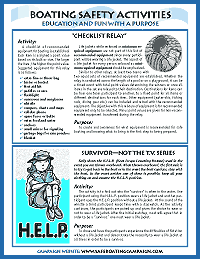
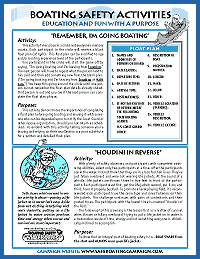
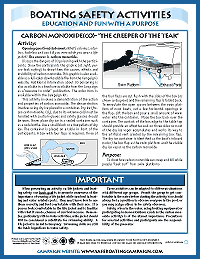
The site hosted brochures, flyers, posters, and activity sheets covering topics such as:
- Types of life jackets and proper fit
- Safe operation practices
- Child and youth boating safety
- Seasonal boating reminders
Many of these materials were designed for public display at marinas, boat shows, schools, and community events.
Public Service Announcements
The campaign made radio scripts, video PSAs, and printable press materials available to local media outlets. These resources allowed consistent safety messaging to reach broader audiences without requiring local organizations to produce original content.
Educational Content for Children
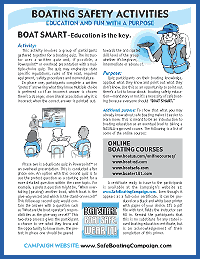
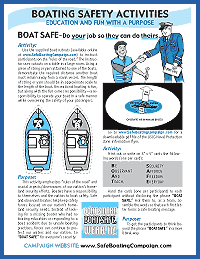
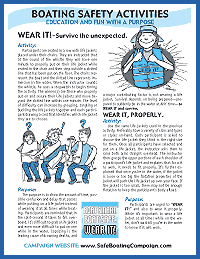
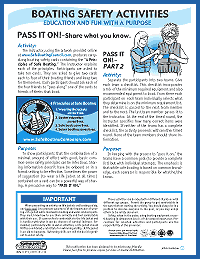
Recognizing the importance of early safety education, SafeBoatingCampaign.net included kid-focused materials such as coloring sheets, simple safety explanations, and interactive learning tools. These resources were commonly used by educators and parents during National Safe Boating Week events.
Events, Campaign Planning, and Grassroots Engagement
A defining feature of the website was its emphasis on grassroots participation. SafeBoatingCampaign.net encouraged users to view the campaign as “their” initiative rather than a top-down program.
Event Listings and Promotion
The site allowed users to submit and view local boating safety events, helping organizers coordinate schedules and increase attendance. These events included safety demonstrations, life jacket fittings, boating course enrollments, and community outreach days.
Campaign Planning Tools
PowerPoint presentations, certificates, logos, and photos were provided to help local organizers present a professional, consistent message. By lowering barriers to participation, the site enabled small organizations and volunteers to run effective safety campaigns without significant budgets.
Feedback and Evaluation
Campaign evaluation forms allowed participants to share feedback and suggest improvements. This feedback loop informed future campaign planning and helped the National Safe Boating Council refine its outreach strategies.
Partnerships and Collaborative Network
SafeBoatingCampaign.net prominently featured its partner organizations, underscoring the campaign’s collaborative nature. These partnerships included:
- Federal agencies involved in maritime safety
- State boating law administrators
- Auxiliary and volunteer boating organizations
- Industry-related foundations and safety groups
- Canadian boating safety organizations
This network allowed the campaign to align educational messaging with regulatory frameworks while maintaining a non-enforcement tone. It also ensured that materials reflected current safety standards and legal requirements across jurisdictions.
Media Presence and Public Visibility
The North American Safe Boating Campaign has historically received media coverage during peak boating seasons, particularly around National Safe Boating Week. Press releases distributed through SafeBoatingCampaign.net provided journalists with ready-to-use statistics, safety reminders, and expert commentary.
Celebrity involvement, such as participation by public figures known for survival-themed media, added visibility and broadened audience reach. These endorsements helped translate abstract safety concepts into relatable, real-world narratives.
Cultural and Social Significance
SafeBoatingCampaign.net represents an important moment in the cultural normalization of recreational boating safety. Prior to campaigns like this, safety practices were often viewed as optional or situational. The site’s messaging contributed to a broader shift in perception, positioning safety as integral to the boating lifestyle rather than separate from it.
By addressing comfort, style, and practicality, the campaign acknowledged cultural resistance to safety gear and worked within those realities rather than dismissing them. This pragmatic approach increased acceptance among experienced boaters who may have previously resisted safety messaging.
Decline of the Original Website and Transition
As digital platforms evolved, SafeBoatingCampaign.net eventually gave way to newer web properties better suited to modern content management, mobile access, and social media integration. The retirement of the site does not reflect a decline in the campaign itself but rather its adaptation to contemporary communication methods.
Archived versions of the site now serve as historical records, offering insight into early 21st-century public safety outreach strategies and the role of the internet in coordinating large-scale educational campaigns.
Continuing Legacy
The principles and messaging established on SafeBoatingCampaign.net continue to influence boating safety outreach today. Modern iterations of the campaign still emphasize life jacket use, education, and shared responsibility, building on foundations laid during the 2007–2008 period.
For researchers, safety advocates, and historians of public outreach, SafeBoatingCampaign.net remains a valuable case study in how nonprofit organizations leveraged early web platforms to unify messaging, empower local action, and promote lasting behavior change.
SafeBoatingCampaign.net was more than a website—it was a functional infrastructure for one of North America’s most enduring recreational safety initiatives. Through educational resources, grassroots tools, and collaborative partnerships, it helped shape modern boating safety culture and contributed to measurable awareness gains.
Though no longer active, its content and structure reflect a pivotal moment in the evolution of public safety communication. The campaign’s continued relevance underscores the lasting impact of the strategies first centralized through SafeBoatingCampaign.net.